Ring Size Conversions: US, UK, EU and China Charts Explained
Four alphabets, one finger. Every ring chart on earth is secretly the same number — the millimetres around the inside of the band.
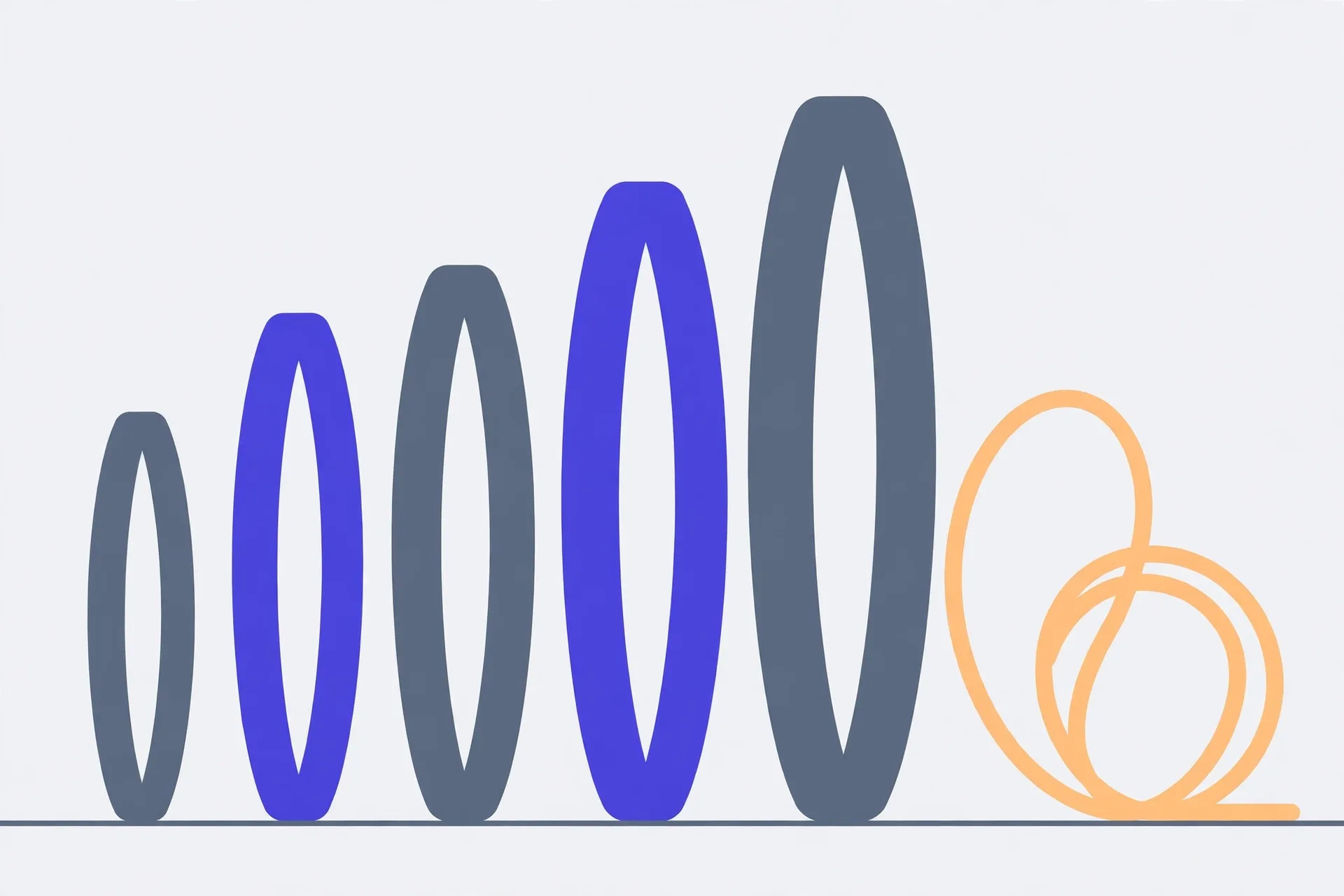
Every ring size system encodes the same measurement: the band’s inner circumference in millimetres. A 54.4 mm ring is US 7, UK N, EU 54 and Japanese 14. US sizes step about 2.55 mm per full size, UK letters step about 1.28 mm (half a US size) per letter, EU sizes simply state the circumference, and Japanese numbers run on their own offset. Chinese listings split between millimetre listings and a numbered chart that matches neither — so always convert through millimetres, measure in the evening, and size up when between sizes.
One measurement underneath every system
Every ring size, in every country, is the same number wearing different clothes: the inner circumference of the band — how far it is around the inside, in millimetres. Once you have that, the systems stop being rivals and become translations. A ring that measures 54.4 mm around the inside is a US 7, a UK N and a Japanese 14, and an EU listing will simply call it 54.
That is why jewellers who argue about charts usually agree about millimetres. If a conversion ever looks wrong, drop back to the circumference and start again. It is also why the most useful thing you can own, ring-wise, is not a size but a measurement: “my finger is about 54 mm around” survives every border, brand and checkout page.
The chart, anchored on millimetres
| US | Diameter (mm) | Circumference (mm) | UK | EU | Japan |
|---|---|---|---|---|---|
| 4 | 14.9 | 46.8 | H | 47 | 7 |
| 5 | 15.7 | 49.3 | J | 49 | 9 |
| 6 | 16.5 | 51.9 | L | 52 | 12 |
| 7 | 17.3 | 54.4 | N | 54 | 14 |
| 8 | 18.1 | 57.0 | P | 57 | 17 |
| 9 | 19.0 | 59.5 | R | 60 | 19 |
| 10 | 19.8 | 62.1 | T | 62 | 22 |
| 11 | 20.6 | 64.6 | V | 65 | 24 |
| 12 | 21.4 | 67.2 | X | 67 | 27 |
Read the pattern, not just the rows. Each full US size adds about 2.55 mm of circumference (about 0.81 mm of diameter), and half sizes exist between the rows — a US 6.5 sits at 53.1 mm. The UK letters march in step: each letter is worth roughly half a US size, about 1.28 mm, which is why the chart skips from L to N to P as the US numbers climb by one. The EU column is the circumference rounded to a whole millimetre — EU 52 is a 51.9 mm ring, EU 54 is 54.4 mm.
How each system encodes the same ring
US and Canada use plain numbers, commonly 3 to 13 for adult rings, with half and sometimes quarter sizes. The numbers are arbitrary — a 7 means nothing by itself — but they step evenly, so an unknown size is easy to bracket once you know one.
The UK and Australia use letters, F at the small end of the usual adult chart through to Z. Letters feel vaguer than numbers until you see the trick: consecutive letters are half-size steps. If a US chart gives you a half size, there is a letter for it; if a UK listing gives you a letter, expect it to land on a US whole or half size.
The EU system is the honest one: the size is the inner circumference in millimetres, full stop. That is why EU sizes look large (52, 57, 62) next to everyone else’s. If you know your circumference, you already know your EU size — round to the nearest millimetre.
Japan uses its own numbering, running a few points behind the circumference: a Japanese 14 is the 54.4 mm ring the US calls 7. The offset is roughly forty plus a millimetre per number, but treat that as a sanity check, not a formula to order by — read across the chart instead.
China is where shoppers most often get caught, because Chinese listings do not all speak one dialect. Many list the size as a circumference in millimetres, EU-style; others use a numbered chart of their own. Neither number matches the US number for the same ring, and a bare numeral on a product page — no millimetres anywhere — is a question to ask the seller, not a size to trust. Convert through millimetres and the ambiguity disappears: ask what circumference the number stands for, then read the chart above.
Measure your finger properly
- Measure in the evening. Fingers swell during the day and shrink in the cold, and a ring sized on a small morning finger can be unwearable by dinner — the converter below repeats this advice because it is the mistake everyone makes.
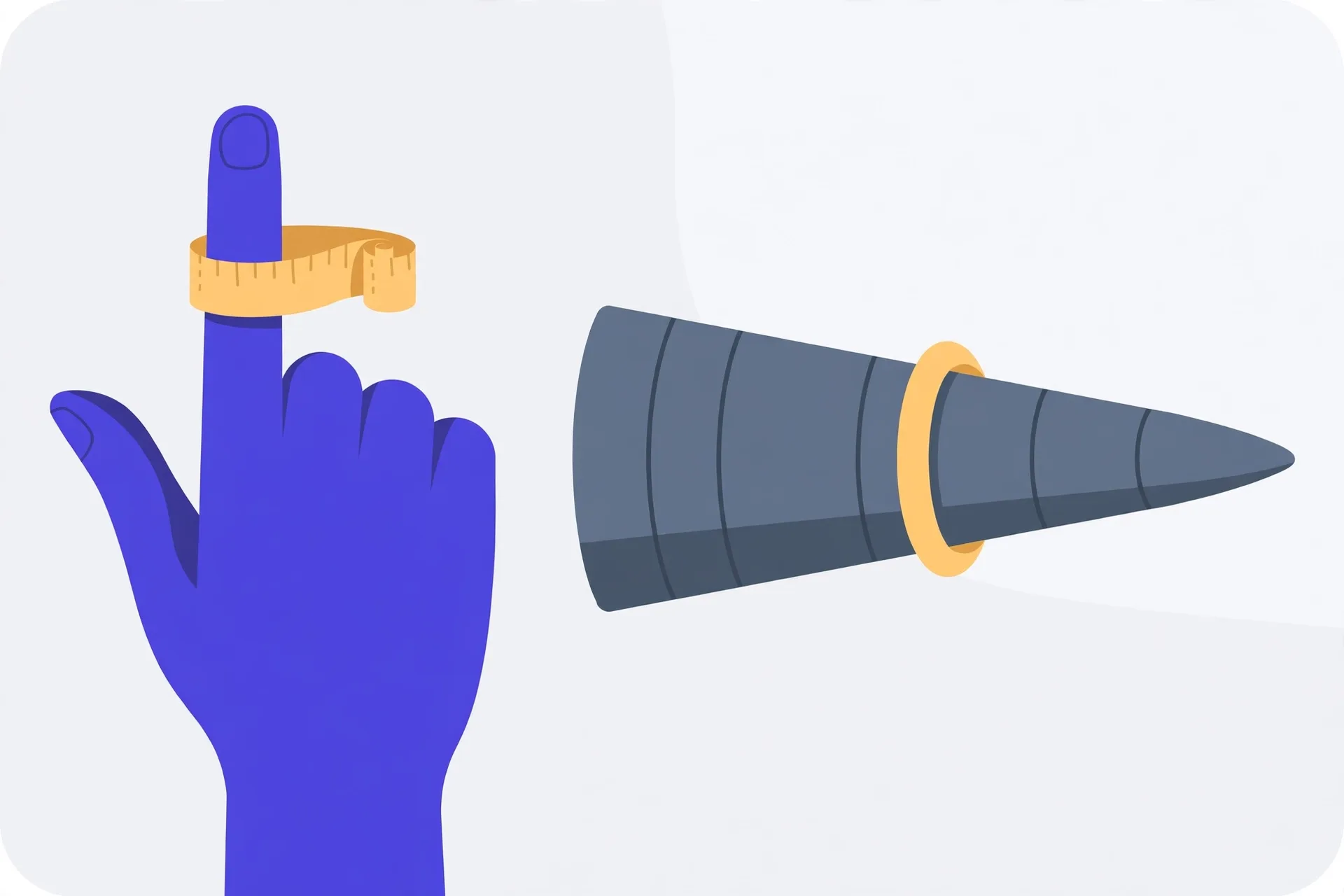
- Wrap a strip of paper or a piece of string around the finger, snug but not tight, at the spot where the ring will sit.
- Mark where the end meets, lay it flat, and measure the length in millimetres. That is your circumference.
- Check the knuckle. The ring has to pass over it, so if your knuckle is much wider than the base of the finger, size for the knuckle and accept a slightly looser fit below it.
- Measure twice, on two evenings if the ring matters. Between sizes — or buying a wide band, which always fits tighter — jewellers generally recommend going up.
Why two honest charts can still disagree
Conversion is rounding. Real fingers land between chart rows, half sizes get dropped by shops that only stock whole sizes, and each brand cuts its bands a touch differently. A wide band grips more of the finger than a narrow one at the same nominal size. Temperature, salt, exercise and time of day move a finger by what feels like half a size on their own.
So treat any chart — this one included — as a very good starting point, not a guarantee. For an inexpensive ring, the chart is enough. For an expensive one, a jeweller’s ring sizer or a cheap plastic sizing set settles in thirty seconds what no table can: the fit on your actual hand, on an actual day.
The Verystep Ring Size Converter takes any US, UK, EU or Japanese size and reads across the same millimetre chart used above — circumference and diameter included. Enter a UK letter like N or a US number like 7 and get every other system at once. It runs in your browser; nothing is stored.
Last verified October 25, 2026 — chart values are the standard circumference series used by the converter below (US 3–13, 44.2–69.7 mm), cross-checked against its reference table (US 7 → UK N / EU 54 / JP 14).
Frequently asked questions
What is a US 7 in UK, EU and Japanese sizes?
A US 7 is a 54.4 mm inner circumference (17.3 mm diameter): UK N, EU 54 and Japanese 14. It is the most useful anchor row in the chart — if you remember one conversion, remember that one.
Is an EU ring size just the circumference?
Yes, rounded to the nearest millimetre. EU 52 is a ring of about 51.9 mm inner circumference, EU 57 about 57.0 mm. That is why EU sizes look so much larger than US or UK sizes for the same ring.
How do I measure my ring size at home?
In the evening, wrap paper or string snugly around the finger, mark where the end meets, and measure that length in millimetres — that is your circumference. Check it passes your knuckle, measure on two evenings if the ring is expensive, and read your size off the chart.
Why doesn’t the size on a Chinese listing match my US size?
Because the number belongs to a different chart. Some Chinese listings give the circumference in millimetres, others use a numbered system that matches neither US nor Japanese numbers. Ask the seller what circumference in millimetres the listed size stands for, then convert from that.
Should I size up or down if I’m between sizes?
Up, in almost every case jewellery advice gives: a slightly loose ring can be worn, a tight one cannot, fingers swell through the day, and wide bands fit tighter than narrow ones at the same nominal size.
More guides
BMI, BMR and TDEE: Three Numbers, Three Different Jobs
One is a ratio, one is an idling cost, one is a daily total. Compare them as if they were the same kind of number and every one of them will mislead you.

Time Zone Math: Why Your Meeting Keeps Landing at 3 A.M.
Nobody on your team is bad at arithmetic. The offset they memorised quietly expired — that's the whole story behind the 3 a.m. meeting.
JSON Without Tears: Structure, and the Five Errors Everyone Makes
One missing comma can break a whole API call — and the error message will blame the wrong line. Here's the tree underneath the text, and the five mistakes that account for nearly every broken file.