Passphrases Beat Passwords: Length, Entropy and Breach Checks
Five ordinary words, chosen at random, outgun the cleverest 8-character scramble you've ever invented — and you won't forget them by Friday.
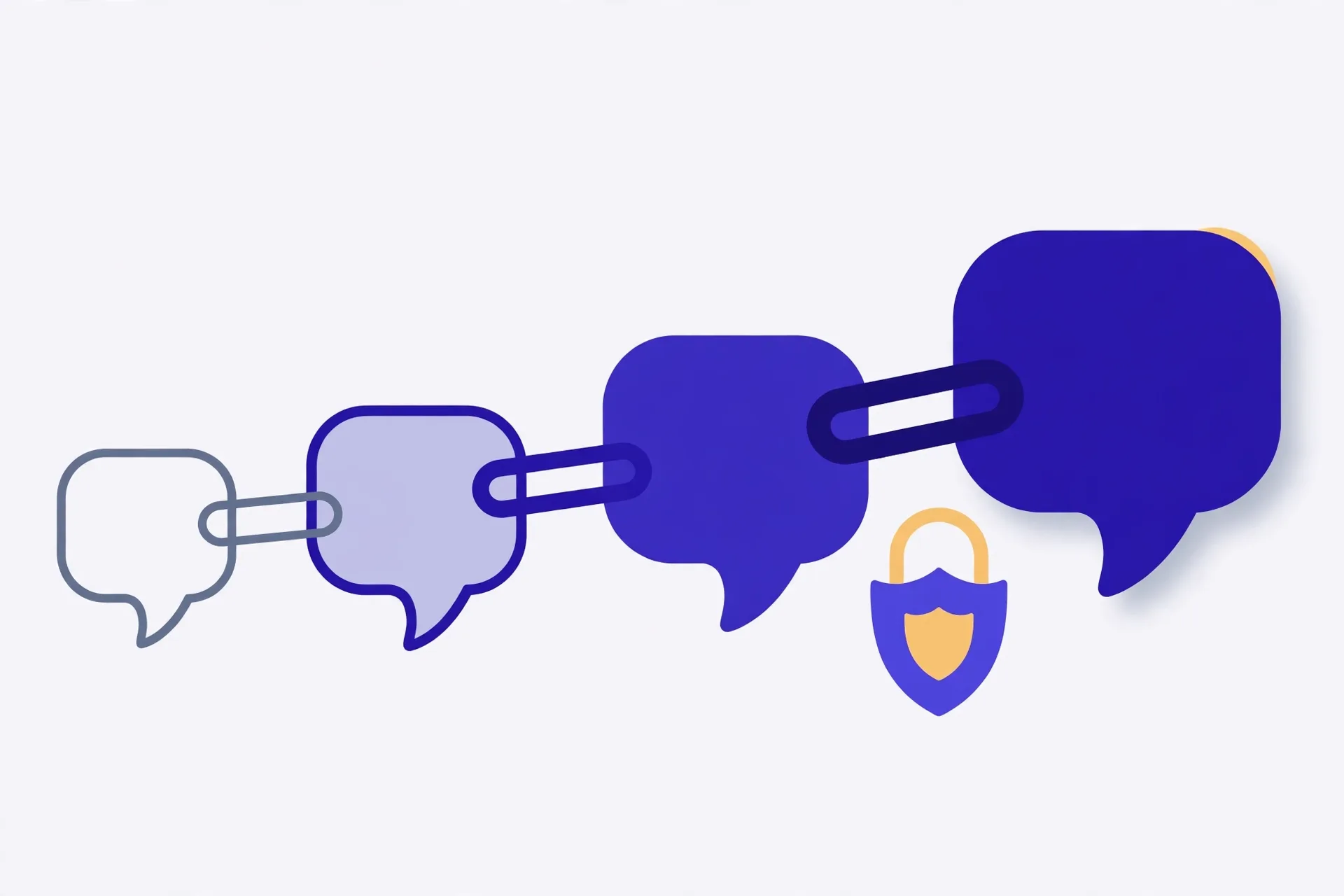
Password strength is entropy: for a random secret it equals the length times the log-base-2 of the character pool. That maths hands the win to length — five words drawn at random from a 7,776-word list carry about 65 bits, the same as roughly 12 random characters from the full keyboard, without the memorisation problem. Human-chosen complexity adds far less than it looks, because cracking software already knows the substitutions. NIST guidance (SP 800-63B) backs the same direction: allow long passwords, drop forced symbol mixtures, and screen against breached values — which is why a breach check matters as much as the score. Entropy figures assume the choice was genuinely random.
The complexity trap
Most people build a password the same way: take a word they like, capitalise the first letter, swap a couple of letters for lookalike symbols, and finish with a number and an exclamation mark. It looks fierce. It isn't. Cracking software doesn't guess letter by letter the way a person at a keyboard would. It starts with dictionaries of real passwords from real breaches, then applies the exact tricks you just used — capitalise the first letter, turn a into @, o into 0 — because those tricks are rules in the software, not surprises.
That's the trap. A short password has a low ceiling no matter how you scramble it, and human scrambling isn't random anyway — we pick the same substitutions, the same trailing digits, the same favourite sports team, and attackers have studied billions of examples. The fix isn't a cleverer scramble. It's a different shape of secret altogether.
Entropy: the only honest score
Password strength is measured in bits of entropy, and the idea is simpler than the name. Entropy counts how many equally likely possibilities an attacker has to work through. For a randomly generated password, the maths is one line: the number of characters, multiplied by the base-2 logarithm of the pool each character was drawn from. Lowercase letters give a pool of 26; capitals, digits and symbols grow it to about 95 — which sounds like a huge jump, until you run the numbers.
| Secret | Entropy, if chosen at random |
|---|---|
| 8 characters from the full keyboard pool (95) | About 53 bits |
| 12 characters from the full keyboard pool | About 79 bits |
| 4 words drawn from a 7,776-word list | About 52 bits |
| 5 words from the same list | About 65 bits |
| 6 words from the same list | About 78 bits |
Read the table and the passphrase case makes itself. Each random word from a standard 7,776-word list adds about 12.9 bits, because the attacker can't rule any word out. Five ordinary words match a long random string of characters — and you can actually remember five words. One catch applies to every row: the maths assumes the choice was genuinely random. A line from a song you love isn't random, and neither is your dog's name plus your street. If you picked it because it means something to you, discount the score.
Why length beats complexity in practice
Length wins twice. First, the arithmetic: every extra character multiplies the search space by the size of the pool, so going from eight characters to sixteen doesn't double the work — it squares the size of the haystack. Second, the human side. A passphrase built from random words forms a small absurd picture, and pictures stick. A mangled string like the one at the top of this page doesn't stick at all, so people write it down, reuse it across sites, or both — and reuse is how most accounts actually fall.
The standards world has caught up with this. The US National Institute of Standards and Technology, in SP 800-63B, tells services to favour length: let people use long passwords — at least 64 characters should be allowed — don't force arbitrary mixtures of symbols, don't make people rotate passwords on a schedule, and screen new passwords against lists of known-compromised values. The official advice stopped asking for passwords that look complicated, and started asking for ones that are long, unique and not already leaked.
A strong password can still be a breached one
Entropy measures how hard a secret is to guess. It says nothing about whether the secret is already public. Password databases leak constantly, and a 70-bit password that appears in a breach dump is worth nothing at all — the attacker doesn't guess it, they just look it up. That's why a breach check belongs next to the strength score.
The checker below does this without exposing the password, using a technique called k-anonymity. Your password is hashed on your own device, and only the first five characters of that hash are sent to the Have I Been Pwned service. It replies with a list of every hash suffix that starts with those five characters, and your browser checks locally whether your full hash is in the list. The password itself, and the whole hash, never leave your machine, and the service can't tell which entry, if any, was yours. If your password shows up in the results, retire it everywhere. Not just on the important accounts. Everywhere.
Build one that holds up
- Start with four or five unrelated words, picked as randomly as you can manage — dice and a word list if you want it done properly, or a password manager's generator if you don't. Unrelated matters: no quotes, no lyrics, no names.
- Join them with a separator if the site insists on one, and add length rather than decoration if you want more strength. A sixth word beats three symbol swaps, every time.
- Use it on exactly one account. Every account gets its own passphrase, which is only practical with a password manager.
- Run it through a strength check and a breach check before you commit to it, the way the tool below does both.
- Switch on a second factor for the accounts that matter — email, banking, the password manager itself — so a leaked passphrase on its own still isn't enough to get in.
None of this is exotic. It's just length, randomness, uniqueness and a leak check — four boring properties that together beat every clever scramble ever typed onto a sticky note.
The Verystep Password Strength Checker estimates a password's entropy and crack time locally as you type, flags common passwords and patterns, and runs an optional breach check against Have I Been Pwned using k-anonymity — only the first five characters of the hash ever leave your browser; the strength analysis never leaves it at all.
Last verified October 28, 2026 — entropy figures computed with the formula used by the checker below (length × log₂ of the character pool; 7,776-word list ≈ 12.9 bits per word), and the service-side guidance summarised from NIST SP 800-63B.
Frequently asked questions
How long should a passphrase be?
Four random words (about 52 bits) is a reasonable floor; five words (about 65 bits) is the better default for important accounts, and six (about 78 bits) for the password that guards your password manager. Padding a short passphrase with symbols doesn't buy the same strength.
Can a passphrase contain spaces?
Often, yes, and a spaced phrase is easier to type accurately. Some sites still reject spaces or certain characters, in which case hyphens or another separator work just as well — the strength comes from the number of random words, not from what joins them.
If my passphrase is strong, do I still need a password manager?
Yes, because strength isn't the only rule — uniqueness is. You can't memorise fifty strong passphrases, and reusing one strong passphrase everywhere means a single breach exposes all of it. Let the manager hold the fifty; you memorise the one that opens the manager.
Does adding 1 and ! to a word make it strong?
Barely. Cracking tools try exactly those endings, along with the standard letter-to-symbol swaps, as part of their basic rule sets. A password like that falls in the first pass of an attack, whatever a naive character-count estimate says. The checker below discounts common passwords and known patterns for this reason.
What does the breach check actually send?
Only the first five characters of your password's SHA-1 hash, computed in your browser. The service returns every known hash starting with those five characters, and the match — if there is one — is found locally on your device. Neither your password nor its full hash is ever transmitted.
More guides
BMI, BMR and TDEE: Three Numbers, Three Different Jobs
One is a ratio, one is an idling cost, one is a daily total. Compare them as if they were the same kind of number and every one of them will mislead you.

Time Zone Math: Why Your Meeting Keeps Landing at 3 A.M.
Nobody on your team is bad at arithmetic. The offset they memorised quietly expired — that's the whole story behind the 3 a.m. meeting.
JSON Without Tears: Structure, and the Five Errors Everyone Makes
One missing comma can break a whole API call — and the error message will blame the wrong line. Here's the tree underneath the text, and the five mistakes that account for nearly every broken file.