PMI Explained: What It Is and When It Drops Off (80% / 78%)
You pay the premium, the lender holds the protection — and there are two different doors out, at two different percentages. Most borrowers only ever hear about one of them.

PMI — private mortgage insurance — is charged on conventional loans when the down payment is under 20%, and it protects the lender, not the borrower. While it lasts, it’s commonly estimated at around 0.5% of the loan per year (the estimate the calculator below uses; your lender sets the real figure). Under the US Homeowners Protection Act of 1998 it ends two ways: you may request cancellation once your balance reaches 80% of the home’s original value, and it must terminate automatically when the balance reaches 78% of the original value on the original payment schedule. The difference matters — the 80% door only opens if you knock. This guide explains the mechanism only; it is not financial advice.
Insurance you pay for, protection the lender gets
PMI is private mortgage insurance, and the first thing to understand is whose insurance it is. You pay the premium, usually as a line inside your monthly mortgage payment. But if you stop paying the loan and the lender can't recover what it's owed, the policy pays the lender. It protects the bank, not you — your credit and your home are exactly as exposed as they'd be without it.
Why does it exist at all? Because of one line lenders draw at 20%. Buy a home with less than 20% down and the lender is exposed on a loan that's nearly the full value of the property. On a conventional loan, PMI is the standard price of crossing that line: it lets the lender say yes to a smaller down payment while someone else carries part of the risk. This guide explains the mechanism and the two percentages that end it — it isn't financial advice, and your own loan documents are the authority on your loan.
Everything runs on one ratio: LTV
Loan-to-value — LTV — is the loan balance divided by the home's value, as a percentage. It's the only number PMI cares about. Put 10% down on a $400,000 home and the maths is: $40,000 down, a $360,000 loan, and an LTV of 90%. Every monthly payment chips the balance down, so the LTV falls with it, slowly at first — early payments are mostly interest — then faster.
Two balances matter for that $400,000 home, and it's worth computing them once, concretely. Eighty per cent of the original value is $320,000. Seventy-eight per cent is $312,000. Hold those two numbers; the next section is about why there are two thresholds instead of one, and why they aren't the same event.
What does PMI cost while you wait? It varies by lender, loan and borrower, and the lender sets the real figure. The calculator below estimates it the simple way: 0.5% of the loan amount per year. On a $360,000 loan that's $1,800 a year, or $150 folded into each monthly payment. Treat that as a planning estimate, never a quote — but it's the right order of magnitude for seeing why the drop-off dates are worth knowing.
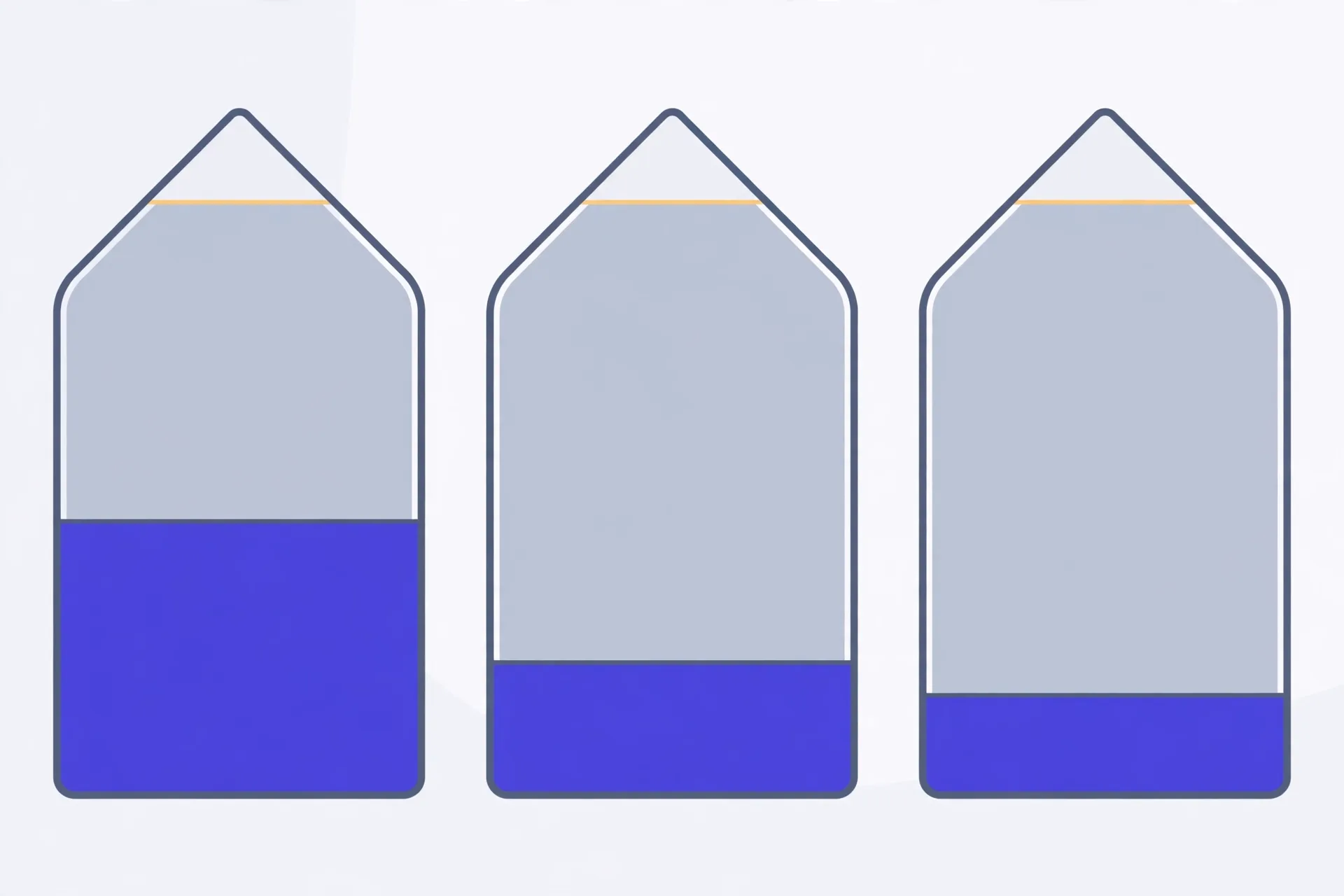
80% and 78%: two different doors out
In the US, the Homeowners Protection Act of 1998 — often called the PMI Act — sets the two thresholds for PMI on conventional loans, and they work differently on purpose:
| 80% — cancellation you request | 78% — termination that happens anyway | |
|---|---|---|
| The trigger | Your balance reaches 80% of the home's original value | Your balance reaches 78% of the original value on the original payment schedule |
| Who acts | You do — you ask your loan servicer, in writing | The servicer must end PMI automatically when the scheduled date arrives |
| Based on | Your actual balance against the original value | The original amortisation schedule — the plan set when the loan was made |
Two phrases in that table do heavy lifting. Original value means the value the loan was set up with — the thresholds don't float up and down with the housing market, so a price boom doesn't move these particular dates by itself. (Lenders may have separate policies about removing PMI early on the strength of a new appraisal; that's their policy, not this Act's schedule.) And original schedule is why the automatic date can be later than you'd expect: the 78% termination fires when the balance was scheduled to reach 78%, read off the plan from day one.
That asymmetry is exactly why the 80% door exists. If you pay extra principal, your actual balance reaches $320,000 well before the schedule said it would — and at that point you don't have to wait for the 78% date. You can ask. Conditions apply — servicers typically look at payment history, and the servicer's confirmation is what counts — but the request right is the borrower's lever, and most people never pull it simply because nobody told them it was there.
What PMI is not
Three confusions follow PMI around. It's not homeowner's insurance: that policy covers the building against fire and theft, protects you, and doesn't end at 80% of anything. It's not the FHA's mortgage insurance premium, MIP — a different system on FHA loans, with its own rules; the 80/78 thresholds here belong to PMI on conventional loans. And paying PMI doesn't build equity any faster: the premium is a cost, like interest, not a deposit. Your equity grows because your balance falls.
Watching for your own drop-off, step by step
- Find the two starting numbers on your closing documents: the original value used for the loan and the original loan amount.
- Compute your two thresholds: 80% and 78% of that original value. For a $400,000 original value, $320,000 and $312,000.
- Check your current balance on a statement and hold it against the 80% line — the calculator below shows the balance year by year, so you can see roughly when the schedule crosses it.
- Near or past 80%? Ask the servicer, in writing, what it needs from you to cancel PMI, and keep paying PMI until the servicer confirms in writing that it's removed.
- Never crossed paths with a request? The 78% automatic termination is the backstop — if the scheduled date passes and PMI is still on the statement, that's a question for the servicer, with your loan documents in hand.
PMI feels like a penalty, and on the monthly statement it reads like one. Mechanically it's simpler than that: a toll charged while the loan is large relative to the home, with two signposted exits — one you have to knock on, at 80%, and one that opens by itself, at 78%. Knowing which door is which is most of the game.
The Verystep Mortgage Calculator adds PMI automatically whenever the down payment is under 20% — estimated at 0.5% of the loan per year, as in the worked example above — and prints the year-by-year balance, so you can watch it approach the 80% and 78% lines. It runs in your browser; nothing is sent anywhere.
Last verified November 1, 2026 — the 80% (borrower-requested cancellation) and 78% (automatic termination) thresholds are those of the Homeowners Protection Act of 1998 (12 U.S.C. §4902), consistent with the mortgage calculator below and this site’s regulatory watch registry. Not financial advice.
Frequently asked questions
What is PMI, in one sentence?
Private mortgage insurance is a policy the borrower pays for on a conventional loan with less than 20% down, which reimburses the lender — not the borrower — if the loan defaults and the home’s sale doesn’t cover the debt.
When does PMI drop off automatically?
Under the Homeowners Protection Act, PMI must terminate automatically when the loan balance reaches 78% of the home’s original value according to the original amortisation schedule. That’s the backstop — it happens without the borrower asking.
What happens at 80%?
At a balance of 80% of the original value, the borrower gains the right to request cancellation — earlier than the automatic date, especially if extra principal was paid. It isn’t automatic: you ask the servicer, conditions such as payment history can apply, and you keep paying until the servicer confirms removal.
How much does PMI cost per month?
It varies by lender, loan and borrower. A common planning estimate — the one the calculator below uses — is 0.5% of the loan amount per year: $150 a month on a $360,000 loan, folded into the monthly payment. Your lender’s figure is the real one.
Is PMI the same as FHA mortgage insurance (MIP)?
No. MIP belongs to FHA loans and follows different rules with a different timeline. The 80% request and 78% automatic-termination thresholds described here are the Homeowners Protection Act rules for PMI on conventional loans.
More guides

Why Damaged QR Codes Still Scan: Error Correction Explained
The torn poster still scans, the scuffed label still scans. That’s not scanner magic — it’s spare data, built into the grid before the code was ever printed.
Hex, RGB, HSL — and the Contrast Ratio Your Text Needs
Three formats, one colour — and a fourth number, the contrast ratio, that none of the three will tell you. That’s the one your readers feel.
UUIDs Explained: v4, v7, and When the Version Matters
One digit in the middle of the string tells you how the whole ID was made — random roll, timestamp, or a hash of a name. Sometimes that digit is trivia. Sometimes it’s the design.